Behind every seamless online order lies a complex web of logistics decisions. The speed of your deliveries, the accuracy of your inventory, and the flexibility of your fulfillment network determine how customers perceive your brand. That’s why more companies are turning to 3PL logistics, a tech-driven way to simplify operations, scale faster, and stay competitive in an always-on economy.
Whether you’re a startup scaling operations or an established retailer seeking agility, understanding what 3PL means and how it works can help you build a stronger, more resilient logistics strategy.
TL;DR
- 3PL logistics involves outsourcing warehousing, inventory management, fulfillment, transportation, distribution, returns, or related technology to an external provider.
- A 3PL can reduce logistics costs, improve delivery performance, provide flexible capacity, and support expansion without additional infrastructure or staff.
- Businesses often consider a 3PL when growth, demand spikes, slow fulfillment, limited resources, or complex returns begin to strain internal operations.
- The right partner should match your service needs, industry, warehouse locations, technology requirements, growth plans, and expectations for communication and transparency.
What Is 3PL (Third-Party Logistics)?
3PL, short for third-party logistics, refers to the outsourcing of logistics and supply chain operations to an external provider. A 3PL company manages one or more elements of your logistics process, such as warehousing, inventory management, transportation, or order fulfillment, on your behalf.
Whether you call it logistics 3PL, 3PL freight, or 3PL distribution, the core purpose remains the same: enabling smoother operations and freeing your team from the heavy lift of day-to-day logistics management.
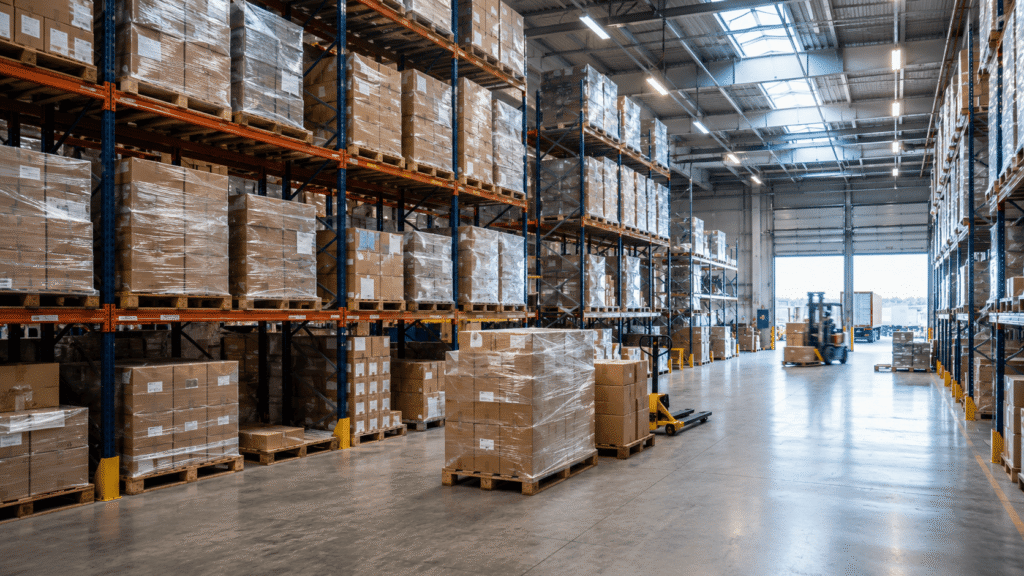
Put simply, 3PL logistics means partnering with specialized providers who handle everything so your team can stay focused on growth. A 3PL warehouse can serve as your primary hub for storing, packing, and distributing goods.
Modern 3rd-party logistics companies also integrate digital systems, predictive analytics, and fulfillment technology to help optimize your supply chain management.
Asset-Based & Non-Asset Based 3PLs
Some 3PLs are non-asset-based, arranging transport and warehousing through a network of partners. Others are asset-based, owning their 3PL warehouses and vehicle fleets. The right model depends on your scale, location, and growth goals.
What Does A 3PL Company Do?
A third-party logistics provider covers multiple supply chain functions that streamline the movement of goods. While offerings vary, most 3PL operations focus on five key areas:
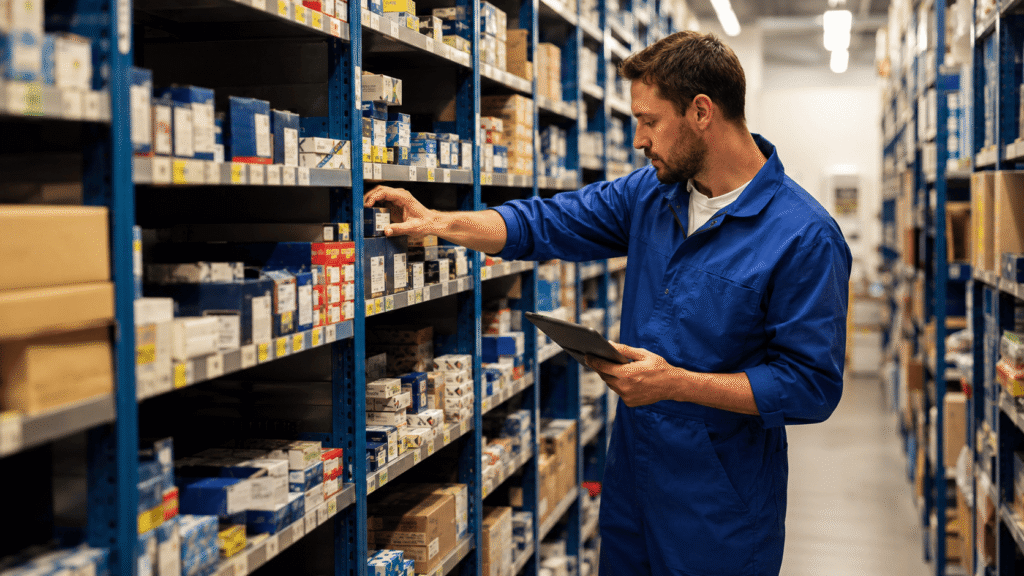
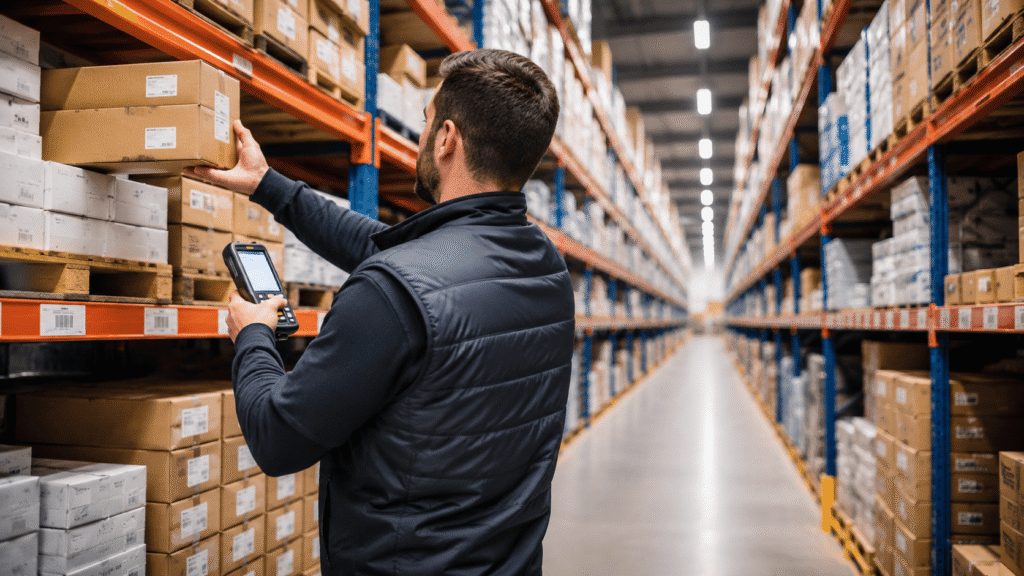
- Warehousing and inventory management: Storing products, tracking stock levels, and ensuring accuracy across all SKUs.
- Order fulfillment: Picking, packing, and shipping customer orders from a centralized location.
- Transportation management: Coordinating carriers, scheduling shipments, and managing freight costs.
- Distribution and returns: Managing both outbound and reverse logistics to maintain customer satisfaction.
- Technology and analytics: Providing real-time visibility through warehouse management systems (WMS) and transportation management systems (TMS).
Example:
A beauty brand sells online using a 3PL fulfillment partner. The 3PL receives stock directly from the manufacturer, stores it in climate-controlled warehouses, fulfills customer orders, and handles returns.
During seasonal surges (Christmas & Hanukkah, Black Friday, Valentine’s Day, promo & influencer events, etc), order volumes may test a brand’s ability to manage inventory. A 3PL will fulfill orders on time and maintain customer satisfaction without overwhelming internal teams.
In some cases, 3PL transportation services even include cross-border shipping, customs management, and multimodal freight coordination. If you plan to sell globally, using a 3PL becomes a well-thought-out option for your fulfillment.
Does Your Organization Need A 3PL Provider?
Not every organization needs a 3PL from day one, but many reach a point where outsourcing logistics becomes the most strategic move. You might benefit from third-party logistics management if you recognize any of these scenarios:
Rising logistics costs: Inefficient warehouse operations or carrier management can inflate expenses. A 3PL logistics partner can consolidate shipments, negotiate better rates, and reduce overhead.
Slower fulfillment and delivery: If customers are waiting too long for orders, a 3PL fulfillment center can dramatically cut delivery times through optimized routing and multiple warehouse locations.
Rapid business growth: Expanding to new regions or scaling e-commerce sales often requires more capacity than your team can handle. A 3PL gives you instant scalability.
Limited internal resources: Managing inventory, technology, and compliance in-house requires expertise. A fulfillment partner brings 3PL industry knowledge and proven systems.
Customer service challenges: If demand spikes or returns overwhelm your team, a third-party logistics provider helps maintain customer satisfaction and consistency.
💡 Industry insight: The majority of companies in the US begin by fulfilling orders in-house, but soon outgrow that setup once online orders surge. Partnering with a 3PL allows them to maintain service quality and expand internationally without additional staff or warehouse investment.
Top Reasons To Integrate 3PL Services Into Your Supply Chain
Businesses that outsource logistics to trusted providers like Nimbl enjoy tangible advantages in performance, cost, and scalability.
1. Network Scale & Reach
A 3PL consolidates thousands of carrier relationships into one network, giving your company nationwide – or global – reach without managing multiple contracts.
2. Responsive Capacity
Because many 3PLs work with vast freight networks, they can find available capacity quickly, even during seasonal peaks. This ensures you always have a transport solution ready.
3. Flexibility & Scalability
Sometimes order volume fluctuates. Third-party logistics lets you scale operations up or down without additional infrastructure. You pay only for what you use.
4. Technology Access
Many 3PL logistics providers integrate advanced tools such as API-connected TMS and real-time tracking dashboards. These tools improve visibility and automation across your 3PL supply chain.
5. Service Diversity
Comprehensive 3PLs offer multimodal freight, warehousing, and distribution services under one roof. This simplifies procurement and allows for smoother coordination.
6. Strategic Focus
Outsourcing logistics allows your team to focus on product development, marketing, and customer relationships; areas that directly drive growth.
How To Choose The Right 3PL Partner
Selecting the right third-party logistics provider involves balancing capability, scale, and strategic alignment. Here’s what to evaluate before you decide.
3PL Services & Expertise
Not all providers handle every type of product. Assess their specialization, whether in eCommerce 3PL, B2B distribution, temperature-controlled storage, or retail compliance. Look for a track record in your sector and robust technology for tracking orders and returns.
3PL Warehouse Locations
Location plays a crucial role in fulfillment speed. Choose a provider with strategically placed 3PL warehouses near major transportation hubs and customer clusters. Proximity reduces shipping times and costs while enhancing service reliability.
3PL Technology & Integration
Ensure your 3PL management system integrates seamlessly with your e-commerce platform or ERP. Real-time visibility into inventory, shipping status, and costs is essential for data-driven decision-making.
Scalability & Adaptability
As your company grows, your logistics needs will evolve. The best 3PL operations are designed to scale with:
- new fulfillment centers,
- carrier network expansion,
- workflow customization, and more.
Transparency & Communication
Third-party logistics management is as much about collaboration as it is about service execution. This is why you should look for a partner that provides detailed reporting, proactive communication, and accountability.
3PL Logistics FAQs
What Is A 3PL?
A 3PL, or third-party logistics provider, manages selected logistics and supply chain functions on behalf of another business. These services may include warehousing, inventory management, order fulfillment, transportation, distribution, and returns.
How Does 3PL Work?
A business sends its inventory to the 3PL’s warehouse, where products are received, stored, and tracked. As customer orders enter through an integrated e-commerce platform or business system, the 3PL picks, packs, and ships them and may also process returns.
How Do You Choose A 3PL Provider?
Start by confirming that the provider has experience with your products, sales channels, and any specialized storage or compliance requirements. You should also evaluate its warehouse locations, technology integrations, scalability, reporting, communication, and ability to support returns.
How Do You Manage 3PL Performance?
Agree on clear performance standards and review them through regular reporting. Useful KPIs include order accuracy, inventory accuracy, on-time delivery, fulfillment turnaround times, shipping damage, and returns caused by fulfillment errors.
What Is The Difference Between 3PL And 4PL?
A 3PL performs specific logistics functions, such as warehousing, fulfillment, or transportation. A 4PL provides broader oversight by coordinating multiple 3PLs, carriers, systems, and processes across the supply chain as a single point of accountability.
Why Is 3PL Important?
3PL allows businesses to access logistics infrastructure, carrier networks, technology, and operational expertise without building everything internally. This can make it easier to handle growth, seasonal demand, new sales regions, and increasingly complex fulfillment requirements.
What Are The Benefits And Drawbacks Of A 3PL?
The main benefits include greater scalability, wider distribution reach, access to logistics technology, reduced infrastructure requirements, and more time for internal teams to focus on core business activities. Potential drawbacks include less direct control over daily operations and greater reliance on the provider’s systems, communication, and service quality.
What Is A 3PL Agreement?
A 3PL agreement is the contract that defines how the provider and client will work together. It should clearly outline the services to be performed, responsibilities, pricing, performance standards, quality checks, reporting expectations, and the duration of the relationship.
3PL vs In-House Logistics: What’s Better?
In-house logistics may suit businesses with manageable order volumes, sufficient space, and the resources to control fulfillment directly. A 3PL is often the stronger option when rising costs, limited capacity, delivery delays, rapid growth, or complex inventory and returns begin to strain the internal operation.
How Do 3PL Warehouses Handle Returns?
A 3PL warehouse receives and inspects returned products before determining the appropriate next step. Depending on their condition and the company’s return rules, items may be restocked, repackaged, refurbished, repurposed, recycled, or disposed of responsibly.
Looking For A 3PL To Simplify Your Logistics?
In a world where speed, precision, and customer experience define success, choosing the right third-party logistics partner is a strategic decision. Whether you’re a growing eCommerce brand or an enterprise managing global freight, modern 3PL logistics management can help you plan smarter, execute faster, and optimize every mile of your supply chain.
At Nimbl, we help businesses streamline logistics and enhance efficiency through intelligent transportation and fulfillment solutions.
Learn how a 3PL solution can strengthen your supply chain from end to end.