Retailers are focusing lately on mastering how orders are processed, routed, and delivered across increasingly complex networks. Growth and reliability in retail fulfillment come only when teams clearly understand what retail fulfillment is, how it differs from B2B fulfillment, which are the main fulfillment models retailers use, and how to optimize retail fulfillment services.
What Is Retail Fulfillment?
Retail fulfillment is the end-to-end process of receiving, storing, assembling, and shipping products to retail destinations or directly to consumers. This can include fulfilling orders for brick-and-mortar stores, eCommerce channels, marketplaces, or hybrid models that combine all three.
Unlike the traditional in-store shopping experience, where customers select products themselves, fulfillment retail operations shift responsibility to the merchant or fulfillment partner, ensuring the correct products are picked, packed, shipped, and delivered according to strict service-level expectations.
Retail fulfillment spans both:
- B2C fulfillment, where individual consumer orders are shipped directly to customers.
- B2B fulfillment, where bulk orders are shipped to retailers, distribution centers, or corporate locations.
Retail Fulfillment vs B2B Fulfillment: What’s The Difference?
Retail fulfillment is often confused with B2B fulfillment, but the two are not interchangeable.
B2B fulfillment refers broadly to shipping products from one business to another, often in large quantities, with strict compliance, routing guides, and documentation. Examples include shipping inventory to retail stores, corporate campuses, or wholesalers.
Retail fulfillment is a subset of B2B fulfillment, focused specifically on serving retail channels. Historically, this meant delivering products to physical store shelves. Today, it also includes shipping inventory to:
- Retail stores (independent business-to-retailer or big-box stores)
- Retail hubs for store-level allocation
- Retail distribution centers that support both stores and online orders
Retail Fulfillment Models Explained
Third-Party Fulfillment (3PL) Model
In the 3PL fulfillment model, retailers outsource inventory storage, order processing, shipping, and returns to a specialized logistics partner. This approach is designed for scale, compliance, and operational resilience, particularly in retail environments with strict routing guides and service-level requirements.
While the fee structure and reduced hands-on control require careful partner selection, a well-governed 3PL relationship replaces operational complexity with consistency, visibility, and execution confidence across growing retail and eCommerce channels.
Advantages
- Deep retail fulfillment and compliance expertise,
- Advanced WMS, OMS, TMS, and real-time analytics,
- Flexible scalability during demand spikes,
- Distributed fulfillment networks that reduce transit time.
In-House (Self-Fulfillment) Model
With in-house fulfillment, retailers retain full ownership of warehousing, picking, packing, and shipping operations, sometimes extending to in-store fulfillment from retail locations. This model offers maximum control over inventory handling and brand presentation, making it attractive for early-stage or low-volume operations.
However, as order volumes increase, manual processes, space constraints, and operational workload can quickly limit efficiency and growth, pulling leadership focus away from strategic expansion and retailer development.
Advantages
- Complete control over inventory and fulfillment execution,
- Full customization of packaging and brand experience.
Dropshipping Model
The dropshipping model removes inventory ownership entirely, routing customer orders directly to manufacturers or suppliers for fulfillment. It offers a fast, capital-light entry into retail and eCommerce, often used to validate product demand or test new markets.
However, limited control over quality, fulfillment speed, and customer experience, combined with thinner margins, makes dropshipping difficult to sustain long-term. As brands mature, many transition to domestic retail fulfillment services to regain reliability and credibility.
Advantages
- Minimal upfront investment,
- Location-independent operations,
- Effective for early product-market validation.
The Retail Fulfillment Process In 6 Steps
Below is a consolidated view of the retail fulfillment process, grouped into clear operational stages.
1. Inventory Receiving & Preparation
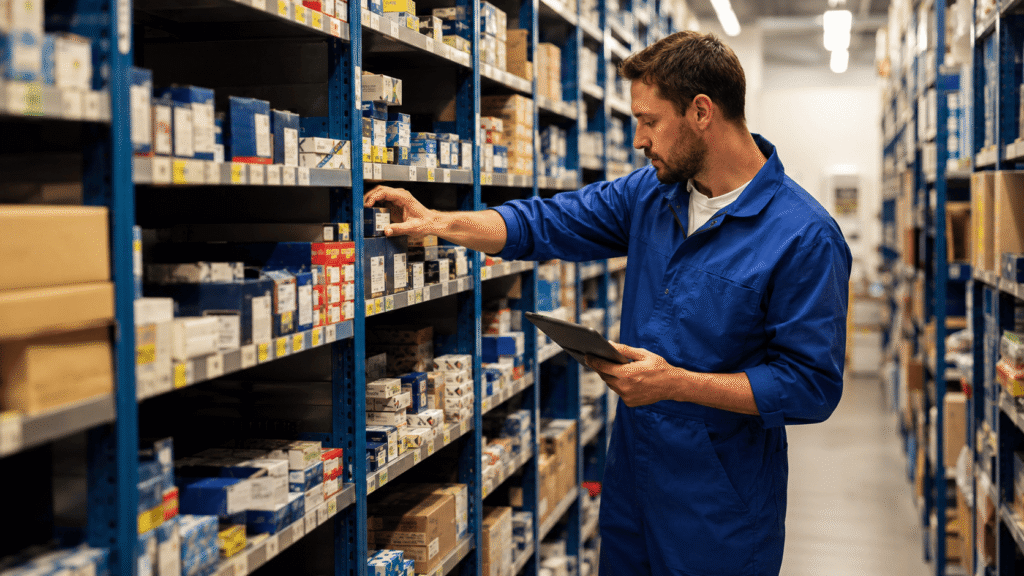
Inbound inventory arrives at a fulfillment center or warehouse, where SKUs are verified, documented, labeled, and stored. Accuracy at this stage is highly important for downstream fulfillment performance.
2. Warehousing & Inventory Management
Products are stored in assigned locations with predefined reorder points. Inventory visibility directly impacts service levels, stock availability, and shipping cost efficiency.
3. Order Processing & Picking
When an order is received – via EDI, OMS, or retailer portal – the picking process gets triggered. Items are retrieved accurately and segregated by order.
4. Packing & Labeling
Orders are packed according to retailer specifications, including cartonization rules, labeling standards, and dimensional optimization.
5. Shipping, Delivery & Pickup
Orders are shipped or staged for retailer pickup based on routing guides, delivery windows, and transportation rules.
6. Returns & Reverse Logistics
Returned items are inspected, restocked, or dispositioned. Efficient reverse logistics protect margins, retailer relationships, and brand reputation.
3 Tips To Optimize Your Retail Fulfillment
- Choose strategic fulfillment locations: Fulfillment center locations directly affect transit times, shipping costs, and retailer service levels.
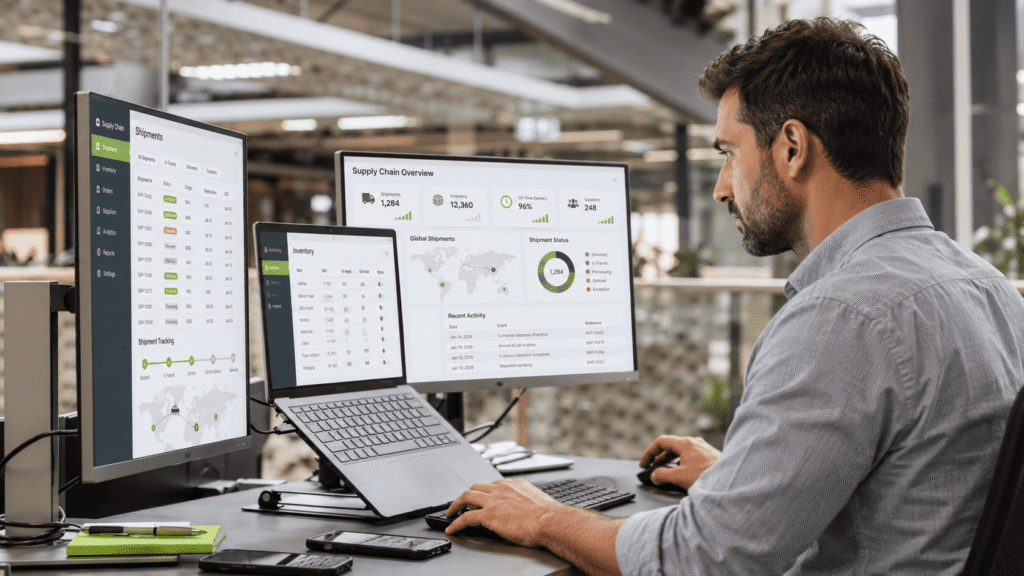
- Use integrated fulfillment technology: Modern retail fulfillment depends on tightly connected systems (WMS, TMS, and analytics) to ensure inventory accuracy, real-time updates, and compliance.
- Design for scalability: Retail success often brings immediate volume increases. Fulfillment operations must scale without introducing errors, delays, or compliance risks.
Retail Fulfillment As A Driver Of Revenue And Scale
Retail fulfillment directly shapes customer satisfaction, retailer relationships, brand reputation, and cash flow. It unlocks broader customer access, larger purchase volumes, and faster brand recognition. However, retailer standards are unforgiving; accuracy, timing, and compliance are mandatory. Retail growth is exponential, and operational missteps scale just as quickly as success.
What Fulfilling With Nimbl Looks Like
Selling into retail often means instant volume growth. Managing that transition without operational disruption requires expertise beyond basic fulfillment.
Nimbl serves as a centralized orchestration layer, aligning fulfillment partners, systems, transportation, and data to ensure retail readiness at scale. We help brands navigate routing, EDI, fulfillment, and compliance.
Are you ready to explore new opportunities to strengthen and scale your fulfillment operations?
FAQs
What Is The Retail Fulfillment Method?
The retail fulfillment method defines how inventory is stored, orders are processed, and products are delivered across retail and consumer channels.
How Does Retail Fulfillment Differ From Ecommerce Fulfillment?
Retail fulfillment must meet strict retailer requirements, including routing guides, EDI communication, delivery windows, and compliance standards, while e-commerce fulfillment prioritizes last-mile delivery speed, flexibility, and direct-to-consumer experience.
When Should A Retailer Transition From In-House Fulfillment To A 3PL?
When order volume increases, retailer compliance becomes complex, or internal teams struggle to scale without errors, partnering with a 3PL helps maintain accuracy, reliability, and growth momentum.