TL;DR
- Ecommerce fulfillment covers the full process of moving an online order from purchase to delivery, including storage, picking, packing, shipping, and returns.
- Strong fulfillment performance depends on every step working together, from fast receiving and organized warehousing to accurate order processing and efficient shipping.
- Inventory visibility, scalable systems, and value-added services help brands improve customer experience while supporting growth.
- The right fulfillment partner can increase speed, accuracy, and operational flexibility without requiring you to manage the infrastructure yourself.
As online shopping accelerates across every retail category, e-commerce fulfillment has become a mission-critical capability for modern brands. Shoppers expect speed, accuracy, and visibility every time. To deliver that standard at scale, businesses must understand the ecommerce fulfillment process end-to-end, select the right workflows, and adopt the tools and partners that ensure operational excellence.
What does the term ecom fulfillment refer to? This guide breaks down the ecommerce and fulfillment ecosystem, key processes, and the resources you need to build a resilient, customer-centric operation.
What Is Ecommerce Fulfillment?
Fulfillment in Ecommerce Definition: Ecommerce fulfillment refers to all the steps required to move an online order from purchase to delivery.
It involves receiving inventory into an ecommerce fulfillment center, placing SKUs into an organized storage system, picking and packing orders accurately, shipping them through the most efficient carrier routes, and managing returns. This sequence represents the full e-commerce fulfillment definition, often also described as e-fulfillment.
While large enterprises may handle order fulfillment in-house, many small and midsize brands choose ecommerce fulfillment outsourcing to scale more efficiently. Partnering with a specialized 3PL or 4PL provider allows brands to focus on growth, break into new markets, enhance inventory control, and deliver faster experiences without managing physical infrastructure themselves.
The Ecommerce Fulfillment Process
The e-commerce fulfillment process consists of interconnected steps that must run smoothly to ensure fast and reliable delivery. Each stage builds on the previous one, influencing cost efficiency, speed, and customer satisfaction. So, what are the 7 steps of order fulfillment?
1. Receiving Inventory
Receiving is the foundation of the entire order fulfillment flow. At this stage, a warehouse accepts inbound shipments, unloads inventory, checks the contents against an Advance Shipping Notice, identifies damage or discrepancies, and logs the items into the Warehouse Management System (WMS).
When pallets sit on the dock rather than moving into active inventory, products remain unavailable for purchase. A strong fulfillment provider places inventory into stock within 24–48 hours and ensures real-time accuracy within the WMS, preventing stockouts, overselling, and operational bottlenecks.
2. Warehousing
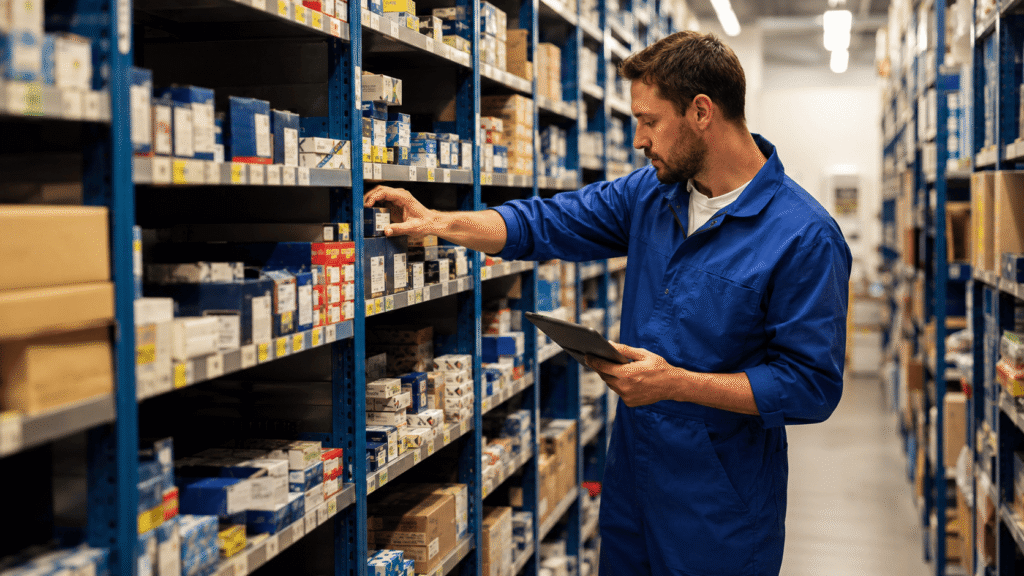
Warehousing is the organized storage of goods in a secure facility until they are needed for order processing. In e-commerce, warehousing is highly dynamic. Products move in and out quickly, and storage systems are optimized to support fast pick paths, minimal error rates, and seamless replenishment.
Early-stage brands may rely on garages or small storage units at first. But as they grow, they either lease dedicated space or outsource ecommerce order fulfillment to a 3PL equipped with the technology, staffing, and structure required for scale.
Start optimizing your fulfillment today!
Inside a modern fulfillment warehouse, SKUs are mapped inside the WMS, bin locations are optimized for pick efficiency, and high-velocity items are strategically positioned near packing stations. Security systems operate around the clock, and every movement of inventory is traceable. This level of organization ensures that the warehousing environment directly supports a fast and precise e-commerce fulfillment process.
3. Inventory Management
Inventory management is one of the most strategic components of fulfillment. Brands must balance product availability with capital efficiency, avoiding both stockouts and costly overstocking. This requires careful forecasting, ongoing monitoring of sales velocity, and timely reordering.
A strong inventory management strategy ensures that you always know how much stock is available, where it is located, and when it needs replenishment. Plus, it prevents surprises that could disrupt customer satisfaction.
4. Order Processing
Order processing transforms an online order into a physical action inside the warehouse. When a customer purchases something, the e-commerce platform sends the order to the WMS, which generates a pick list containing SKU locations. Pickers then retrieve items following methods such as single-order picking, batch picking, or zone picking, depending on the setup.
Once picked, products move to the packing station. Here, packers select the appropriate box size, add protective materials, seal the order, apply the label, and confirm completion in the system.
A leading fulfillment partner processes orders the same day or within 24 hours to prevent delays. Quick, accurate processing preserves the customer promise and ensures the rest of the fulfillment flow remains on schedule.
5. Shipping
Distribution is the critical link between your fulfillment center and your customer. It involves selecting the right carrier, setting the appropriate service levels, managing costs, and ensuring every package – whether standard, oversized, or HAZMAT – reaches its destination quickly and reliably.
Shipping performance is influenced by:
- the distance between origin and destination,
- product weight, and dimensions,
- regulatory requirements for hazardous materials,
- service-level expectations,
- carrier rates,
- the geographic positioning of your warehouse network.
A modern 3PL, like Nimbl, uses a Transportation Management System (TMS) to:
✅ manage daily carrier pickups,
✅ automate label creation,
✅ optimize routing.
Providers also negotiate bulk rates and streamline group shipping initiatives, consolidating multiple orders or SKUs into fewer shipments to minimize transportation costs. Most importantly, strategically located or multi-node fulfillment networks reduce transit times across shipping zones, enabling consistent two-day or better delivery for the majority of your customers.
6. Value-Added Services
Value-added services enhance the customer experience and allow brands to offer customization beyond standard pick and pack order fulfillment. Common examples include:
- branded or gift packaging,
- personalized notes or inserts,
- product customization (such as engraving),
- subscription box assembly,
- or specialized kitting projects.
These services add perceived value, help brands differentiate in crowded markets, and elevate the unboxing experience.
7. Returns Processing
Returns, also known as reverse logistics, are an unavoidable component of e-commerce fulfillment. Handling them efficiently preserves customer trust and protects revenue.
A returns process typically begins with return authorization, which helps track inbound items. Once a product is received, warehouse staff inspects it to determine whether it can be restocked, discounted, or discarded.
Many e-commerce fulfillment and distribution centers integrate with returns platforms, simplifying the customer experience by automating label creation, notifications, and refund updates.
Some brands choose to process returns in-house, especially for quality inspections or defect analysis. Others rely entirely on their 3PL for receiving, inspecting, and reinjecting sellable units back into inventory. A strong returns strategy supports customer satisfaction and keeps inventory flowing smoothly, even in unpredictable conditions.
Ecommerce Fulfillment FAQs
What Is Ecommerce Fulfillment?
Ecommerce fulfillment refers to the full process of moving an online order from purchase to delivery. It includes receiving inventory, storing products, managing stock, picking and packing orders, shipping them efficiently, and handling returns.
What’s Included In Ecommerce Fulfillment?
A complete ecommerce fulfillment operation typically includes receiving, warehousing, inventory management, order processing, shipping, value-added services, and returns processing. Together, these functions support delivery speed, order accuracy, and a better customer experience.
How To Choose An Ecommerce Fulfillment Provider?
Look for a provider with fast receiving, same-day or next-day processing, strong accuracy, real-time inventory and order visibility, scalable operations, and reliable technology integrations. The right partner should function as an extension of your business and support growth without creating unnecessary operational friction.
How Does Ecommerce Fulfillment Handle Returns?
Returns processing usually starts with return authorization so inbound items can be tracked properly. Once products arrive, they are inspected and then restocked, discounted, or discarded based on condition, while many providers also use returns platforms to automate labels, notifications, and refund updates.
How To Use A 3PL For Ecommerce Fulfillment?
Brands use a 3PL by outsourcing warehousing and fulfillment activities such as storage, picking, packing, shipping, and sometimes returns or value-added services. This approach is often a practical way to scale, improve inventory control, and expand into new markets without managing the physical infrastructure internally.
How To Set Up An Ecommerce Fulfillment System?
A strong fulfillment system starts with organized receiving, accurate inventory tracking, a well-structured storage layout, and workflows that connect your ecommerce platform to a WMS. From there, the goal is to create a process that supports accurate picking, efficient packing, timely shipping, and clear visibility across every stage.
How To Improve Ecommerce Order Fulfillment?
Improving ecommerce order fulfillment usually comes down to tightening performance at each stage of the process. Faster receiving, better inventory visibility, efficient pick paths, accurate order processing, smart carrier selection, and a well-positioned warehouse network all contribute to lower costs and a more reliable delivery experience.
Should You Handle Ecommerce Fulfillment In-House Or Outsource It?
That depends on your order volume, growth stage, internal resources, and operational complexity. Some larger businesses keep fulfillment in-house, but many small and midsize brands outsource to specialized providers so they can scale faster and focus more of their time on growth.
How To Evaluate A High-Performance Order Fulfillment Provider
Selecting the right partner is one of the most strategic decisions in e-commerce operations. A strong fulfillment partner provides the infrastructure, technology, and expertise to streamline your fulfillment model of e-commerce while supporting long-term growth.
What to look for in an e-commerce fulfillment provider:
- Fast receiving, same-day or next-day order processing, and proven accuracy
- Real-time visibility into orders and inventory
- Scalability across multiple facilities and channels
- Strong technology integrations and transparent reporting
A fulfillment provider should operate as an extension of your business, improving customer experience through speed, accuracy, and flexibility. Whether you’re considering outsourcing e-commerce fulfillment for the first time or looking to upgrade from an existing partner, choose a solution that supports expansion and helps you deliver a consistently excellent experience. Choose Nimbl.