TL;DR
- A fulfillment center is a specialized logistics facility that stores inventory, processes orders, and ships products on behalf of e-commerce, retail, and wholesale brands.
- Unlike a traditional warehouse, a fulfillment center is built for active inventory movement, fast order turnaround, and day-to-day execution across multiple channels.
- The core process includes receiving and storage, order processing, picking and packing, shipping, and returns handling, including decisions around restocking or rework.
- For growing e-commerce businesses, fulfillment centers provide the infrastructure needed to scale order volume, improve delivery performance, and reduce the operational burden of in-house fulfillment.
As e-commerce, retail, and wholesale fulfillment operations scale, logistics execution becomes a competitive differentiator. Many growing businesses eventually reach a tipping point where in-house warehousing can no longer support speed, accuracy, or cost control. That is where a fulfillment center becomes critical.
This guide explains what a fulfillment center is, how it works, and how it differs from traditional warehousing through the lens of operational discipline and performance.
What Is A Fulfillment Center?
A fulfillment center is a specialized logistics facility, often operated by a third-party logistics provider, that stores inventory, processes orders, and ships products on behalf of e-commerce, retail, and wholesale brands. Rather than serving as a place for inventory to sit long term, it is designed to keep goods moving efficiently from inbound receipt to outbound delivery.
In other words, it is the operational hub that connects inventory to demand across all sales channels. A modern fulfillment warehouse supports omnichannel commerce, serving B2C orders, B2B shipments, and hybrid models within a single distribution point.
Unlike static storage facilities, fulfillment centers are execution-focused. Inventory moves continuously, guided by warehouse management systems, integrated order flows, and defined service-level expectations. In many networks, such establishments also act as fulfillment distribution centers, coordinating outbound freight, parcel shipping, and returns.
What Is An Example Of A Fulfillment House?
An example of a fulfillment house could be an online brand selling through Shopify, Amazon, and wholesale retailers. Instead of storing products in its own warehouse, it sends inventory to a fulfillment center. When a customer places an order online, the fulfillment center receives it automatically, picks the item, packs it, ships it the same day, and updates tracking. At the same time, the same facility can prepare palletized wholesale orders for retail partners, all from the same inventory pool.
What Do Fulfillment Centers Do?
Fulfillment Activities
Fulfillment centers manage the full flow of inventory and orders, from inbound receipt to final delivery. While the exact setup varies by operation, the core process usually follows the same sequence.
Receiving & Storage
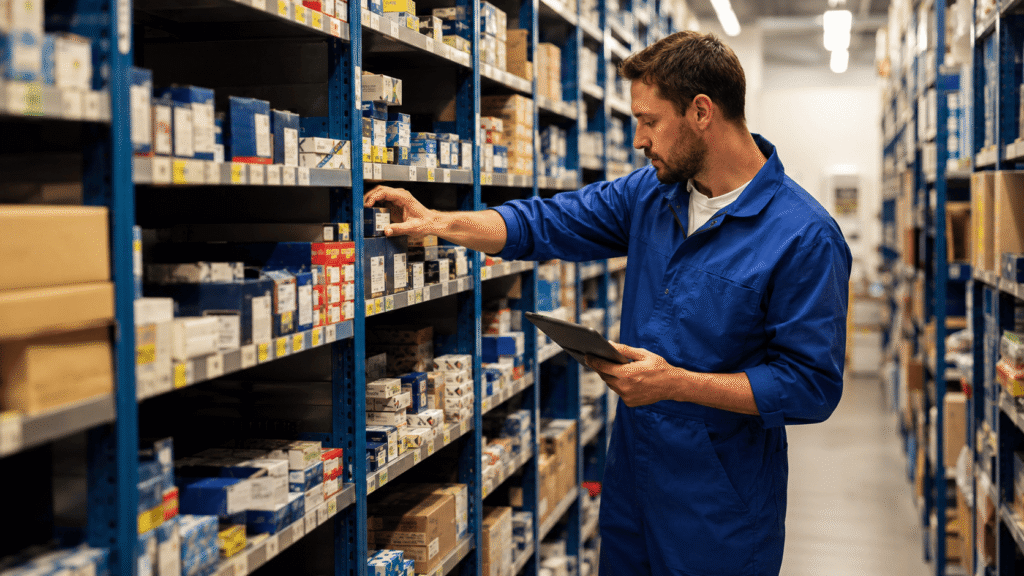
The process begins when inventory arrives from manufacturers, suppliers, or other upstream facilities. Products are received, checked into inventory, and stored by SKU in designated locations so they can be accessed quickly and managed accurately as demand changes.
Order Processing
Once inventory is available, orders flow into the operation from e-commerce platforms, marketplaces, wholesale systems, or EDI-connected channels. The fulfillment center processes those orders in real time and routes them based on shipment requirements, service levels, and destination.
Picking, Packing & Shipping
After an order is released, items are picked from storage, packed for transit, labeled, and prepared for carrier handoff. This stage is where execution speed and accuracy matter most, especially for operations handling high daily order volume across multiple channels.
Returns & Inventory Re-Entry
The workflow does not end when an order leaves the building. Fulfillment centers also manage returns, inspections, and rework, determining whether returned products should be restocked, repacked, or routed for another disposition.
This is what defines fulfillment warehousing. It is not just about storing inventory, but about managing inventory and order flow across every stage of the operation.
Fulfillment Technology
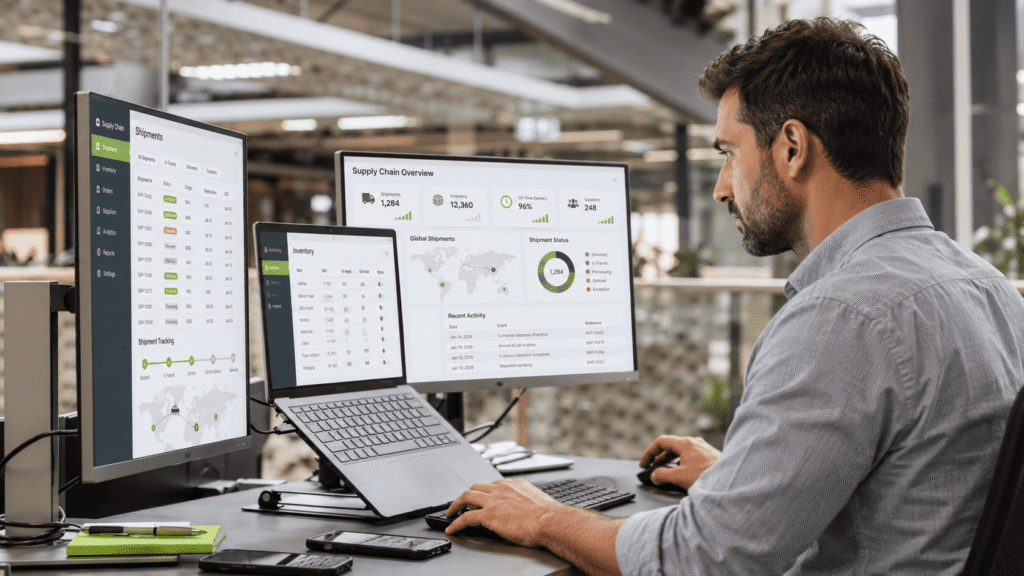
A fulfillment center only performs as well as its systems. Warehouse management systems (WMS), order integrations, barcode scanning, and real-time inventory visibility determine whether operations scale cleanly or degrade under volume.
When fulfillment is executed correctly, inventory accuracy improves, cycle times shorten, and service reliability becomes predictable. Nimbl uses the following tech-stack to accurately fulfill your orders:
- Warehouse Management System (WMS)
- Transportation Management System (TMS)
- Order Management System (OMS)
- Barcode Scanning
- Real-Time Inventory Visibility
- Carrier & Shipping Integrations
- Returns & Reverse Logistics Systems
- Reporting, Analytics & KPI Dashboards
- Order Processing Automations & Rules Engines
Fulfillment Center vs Traditional Warehouse: Key Differences
Functional Scope
A warehouse is designed primarily for storage. A fulfillment house is designed for movement. Inventory in a warehouse may sit for weeks or months. Inventory in a fulfillment center is expected to flow continuously.
Operational Complexity
Fulfillment centers manage thousands of daily transactions, each with accuracy and speed requirements. This demands integrated systems, defined workflows, and performance monitoring that far exceed traditional warehousing.
Order-Level Execution
Warehouses typically handle bulk movements. Fulfillment centers specialize in order-level execution; each order is picked, packed, verified, and shipped individually.
Goals & Metrics
Warehouses optimize for space utilization. Fulfillment centers optimize for service levels, cycle time, and accuracy.
Cost Implications
Fulfillment services may appear more expensive per unit than traditional warehousing, where inventory is largely stored and moved in bulk. However, fulfillment houses reduce total landed cost by minimizing picking errors, increasing inventory velocity, and accelerating order-to-delivery cycles.
Long-Term Storage Considerations
Warehouses work better for long-term storage. Fulfillment centers, on the other hand, are not designed for indefinite storage. They are optimized for velocity, not holding inventory idle.
Benefits Of A Fulfillment Center To Ecommerce Businesses
E-commerce fulfillment needs to connect online demand to physical execution, ensuring orders are processed, shipped, and delivered accurately as volume and customer expectations increase. Here is how retail fulfillment centers support this need.
Pick, Pack, And Ship At Scale
Fulfillment centers execute pick-pack and ship workflows with standardized processes, trained labor, and automation where appropriate. This consistency is difficult to replicate in ad-hoc or in-house setups.
Real-Time Inventory Management
Modern fulfillment operations provide continuous inventory visibility. Stock levels update automatically as orders flow, enabling better forecasting and replenishment planning.
Cost & Space Efficiency
Outsourcing fulfillment eliminates the need to invest in facilities, labor, and systems. It converts fixed costs into variable costs aligned with demand.
Order Accuracy & Speed
Dedicated fulfillment operations reduce error rates and accelerate shipping timelines, both of which directly impact customer satisfaction and repeat purchase behavior.
Benefits Of Using A Fulfillment House For Your Business
Whether full 3PL service or execution-focused, fulfillment centers help businesses control cost, scale reliably, stay focused on growth, and meet rising customer expectations.
Cost Efficiency Through Specialization
When fulfillment is the core operation – not a side responsibility – it is executed with greater efficiency. Fulfillment centers invest in trained labor, standardized workflows, and purpose-built technology that most in-house operations struggle to justify. This reduces hidden costs such as picking errors, rework, delayed shipments, and excess inventory.
Shipping costs are another major lever. Fulfillment centers ship at volume and negotiate carrier rates accordingly, often accessing services and delivery options that individual brands cannot. Combined with smarter carrier selection and routing logic, this lowers total landed cost even if per-unit fees appear higher on paper.
Scalability Without Operational Disruption
In-house fulfillment ties growth directly to space, staffing, and capital investment. Fulfillment houses decouple growth from infrastructure. As order volume increases during promotions, holidays, or expansion into new channels, the operation scales with demand. Seasonal labor, storage rebalancing, and throughput adjustments are absorbed operationally, not pushed back onto your team.
Focus On Core Business Priorities
Outsourcing fulfillment removes day-to-day execution pressure. Instead of managing labor schedules, carrier issues, or warehouse constraints, teams can focus on product development, merchandising, marketing, and customer acquisition. Fulfillment becomes a managed capability rather than a constant distraction.
Improved Customer Experience & Reliability
Speed, accuracy, and transparency define modern post-purchase experience. Fulfillment centers deliver faster processing, fewer errors, reliable tracking, and structured returns handling. These execution details directly impact customer satisfaction, repeat purchase behavior, and brand trust; areas where operational consistency matters more than promises.
Rethinking The Distribution & Fulfillment Center Model With Nimbl
Nimbl approaches fulfillment as a managed operation. Technology, process design, and daily controls are aligned to deliver predictable outcomes across B2B and B2C flows. Nimbl focuses on making your performance measurable and your fulfillment scalable.
If your operation depends on accuracy, speed, and customer satisfaction, you should talk to our fulfillment experts.
Fulfillment Center FAQs
What Is A Fulfillment Company?
A fulfillment company manages inventory, order processing, packing, shipping, and returns on behalf of brands, providing the systems, labor, and execution discipline required to deliver reliable, scalable order fulfillment.
Is A Fulfillment Center Good For Long-Term Storage?
Fulfillment centers are optimized for inventory movement, not indefinite storage. While short-term holding is common, long-term storage is typically better suited to traditional warehousing facilities.
What Legal And Regulatory Considerations Apply To Fulfillment Operations?
Fulfillment centers must comply with safety, labor, and trade regulations while protecting customer data through strong cybersecurity controls. Ongoing compliance ensures operational continuity, reduces risk, and supports scalable, disruption-free fulfillment operations.
Is A Fulfillment Center The Same As A 3PL?
Not exactly. A fulfillment center is the physical facility where inventory is stored and orders are processed, picked, packed, and shipped. A 3PL, or third-party logistics provider, is the company that operates those services, often using one or more fulfillment centers as part of a broader logistics network.
Do Fulfillment Centers Store Inventory And Ship Orders?
Yes. A fulfillment center receives inbound inventory, stores products in active locations, processes incoming orders, and handles picking, packing, shipping, and returns. That combination of storage and order execution is what separates fulfillment operations from facilities built mainly for long-term warehousing.
What Is The Difference Between A Warehouse And A Fulfillment Center?
A warehouse is primarily built for storage, often over longer periods and in bulk quantities. A fulfillment center is built for movement. It handles continuous order flow, faster inventory turnover, and the day-to-day execution required to ship individual orders accurately and on time.
Why Do Ecommerce Businesses Use Fulfillment Centers?
E-commerce businesses use fulfillment centers to scale order volume without building and managing warehouse operations internally. A fulfillment center provides the space, labor, systems, and shipping workflows needed to support faster delivery, better order accuracy, and more consistent customer experience as demand grows.